Current lab members
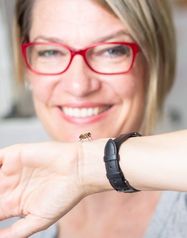
Karin Nordström, she/her
Karin defended her PhD in 2003, supervised by Dan Nilsson in the Lund Vision Group and Dan Larhammar at Uppsala University, followed by a post doc with David O'Carroll at Adelaide University. She spent 2009-2015 at Uppsala University, establishing the Motion Vision group. Karin has been at Flinders University since 2015. ABC radio interview World Wide Neuro talk PhD student supervision |
|
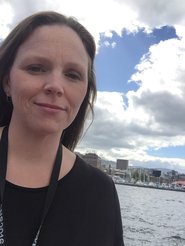
Sarah Nicholas, electrophysiologist and lab guru, she/her
Sarah joined the lab in 2017, and with her 20+ years of experience doing electrophysiology, she is invaluable. She primarily studies descending neurons in the hoverfly visual system.
Sarah joined the lab in 2017, and with her 20+ years of experience doing electrophysiology, she is invaluable. She primarily studies descending neurons in the hoverfly visual system.
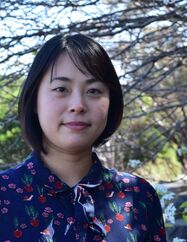
Dr Yuri Ogawa, Colour vision lead, she/her
Yuri came to Flinders in 2019. She did her PhD with Kentaro Arikawa in Japan, then a post doc with Jan Hemmi at UWA, and with Ajay Narendra at Macquarie.
Please follow this link for my up-to-date webpage
Yuri came to Flinders in 2019. She did her PhD with Kentaro Arikawa in Japan, then a post doc with Jan Hemmi at UWA, and with Ajay Narendra at Macquarie.
Please follow this link for my up-to-date webpage
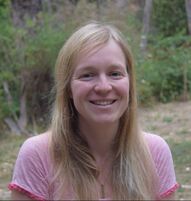
Dr Katja Sporar Klinge, post doc, she/her
Katja joined the lab in 2022 to work on descending neurons. She did her PhD with Marion Silies.
Katja joined the lab in 2022 to work on descending neurons. She did her PhD with Marion Silies.

Lixin Zhen, honours student, she/her
Lixin is doing honours looking at sleep and visual behaviors.
Lixin is doing honours looking at sleep and visual behaviors.
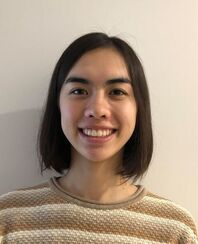
Aika Young, undergraduate student, she/her
Aika is doing an internship quantifying visual behaviors in hoverflies.
Aika is doing an internship quantifying visual behaviors in hoverflies.
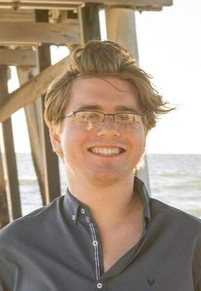
Jaxon Mitchell, software developer
Jaxon is giving our visual display stimulus FlyFly a much needed update. Before joining the lab he studied Biomedical Engineering using Matlab to understand EEG signals.
Jaxon is giving our visual display stimulus FlyFly a much needed update. Before joining the lab he studied Biomedical Engineering using Matlab to understand EEG signals.
Previous lab members
Raymond Aoukar, software development, 2021-2023, then at Lumination. Raymond developed our virtual reality.
Sam Mosavi, summer scholarship, 2022
Shaun Dungey, internship, 2022
Malin Thyselius, in the lab from the very beginning (2012), finished her PhD in 2022
Lana Sobieralski, summer scholarship followed by placement, 2022
Chris Johnston, software developer, 2021-2022, then at Lumination
Luke Turnbull, psychology student working on hoverfly behaviour, now doing a PhD in Psychology
Annabel Moran, summer scholarship, 2022
Lily Mikajlo, Undergraduate placement, 2021
Joseph Fabian, post doc, 2019-2021, then post doc with Steven Wiederman
Richard Leibbrandt, programmer, 2017-2021, now a Lecturer in Computer Science
Jason van Leuven, honours, 2020, now doing a PhD in pharmacology
Kai Judson, Internship, 2020
Bernie Lagana, Post Graduate Medicine, Advanced Studies, 2019-2020
Samuel James, Undergraduate placement, 2019
Kevin Trunks, Honours, 2018-2019
Klára Daňková, internship student, 2018-2019, followed by a PhD at Charles University, Prague, Czech Republic
Marissa Holden, 2016-2018, then a PhD student at SAHMRI
Van Sinh, trackball development project 2018, then a medical student at Flinders
Olga Dyakova, PhD 2013 - 2017, followed by a brief post doc. She is now working in education
Talha Shafiq, optometry student, did an undergraduate summer project in the lab
Demi Gao, was in the lab for about a year in 2015-16. She is now in Melbourne
Josefin Dahlbom was the guiding star of the pollination project between 2014 and 2016
Erik Karlsson worked as field assistant with Josefin Dahlbom during the summer of 2015
Kristian Johansson, Master thesis for the Program in Sociotechnical Systems Engineering
Frank Lee did his PhD in the group between 2010 and 2014. He's now running a successful photography studio
Linus Nilsson was here 2011-2013, completing his Master in Engineering Physics. Linus wrote our data acquisition software
Roel de Haan did his master thesis in the group. Roel then did a PhD with Christiaan de Kock in Amsterdam
Sarah Kaspar, project student. Sarah then went on to finish her masters
Andrea Adden, Erasmus internship. Andrea then did a PhD in the Lund Vision Group
Johan Jakobsson, IBG master thesis. Johan then did a PhD in Lund
Olof Jönsson, project student. Olof then did a PhD in physics
Tomas Måhlberg, programer. Tomas then went on to finish his master thesis
Sharn Perry, honours, the University of Adelaide. Sharn then did a PhD with Klas Kullander, and is now at UTas
Jonas Henriksson, master thesis. Jonas is now working as a programmer. Jonas wrote our visual stimulus software, FlyFly
Angela Winkler, Erasmus exchange
Sam Mosavi, summer scholarship, 2022
Shaun Dungey, internship, 2022
Malin Thyselius, in the lab from the very beginning (2012), finished her PhD in 2022
Lana Sobieralski, summer scholarship followed by placement, 2022
Chris Johnston, software developer, 2021-2022, then at Lumination
Luke Turnbull, psychology student working on hoverfly behaviour, now doing a PhD in Psychology
Annabel Moran, summer scholarship, 2022
Lily Mikajlo, Undergraduate placement, 2021
Joseph Fabian, post doc, 2019-2021, then post doc with Steven Wiederman
Richard Leibbrandt, programmer, 2017-2021, now a Lecturer in Computer Science
Jason van Leuven, honours, 2020, now doing a PhD in pharmacology
Kai Judson, Internship, 2020
Bernie Lagana, Post Graduate Medicine, Advanced Studies, 2019-2020
Samuel James, Undergraduate placement, 2019
Kevin Trunks, Honours, 2018-2019
Klára Daňková, internship student, 2018-2019, followed by a PhD at Charles University, Prague, Czech Republic
Marissa Holden, 2016-2018, then a PhD student at SAHMRI
Van Sinh, trackball development project 2018, then a medical student at Flinders
Olga Dyakova, PhD 2013 - 2017, followed by a brief post doc. She is now working in education
Talha Shafiq, optometry student, did an undergraduate summer project in the lab
Demi Gao, was in the lab for about a year in 2015-16. She is now in Melbourne
Josefin Dahlbom was the guiding star of the pollination project between 2014 and 2016
Erik Karlsson worked as field assistant with Josefin Dahlbom during the summer of 2015
Kristian Johansson, Master thesis for the Program in Sociotechnical Systems Engineering
Frank Lee did his PhD in the group between 2010 and 2014. He's now running a successful photography studio
Linus Nilsson was here 2011-2013, completing his Master in Engineering Physics. Linus wrote our data acquisition software
Roel de Haan did his master thesis in the group. Roel then did a PhD with Christiaan de Kock in Amsterdam
Sarah Kaspar, project student. Sarah then went on to finish her masters
Andrea Adden, Erasmus internship. Andrea then did a PhD in the Lund Vision Group
Johan Jakobsson, IBG master thesis. Johan then did a PhD in Lund
Olof Jönsson, project student. Olof then did a PhD in physics
Tomas Måhlberg, programer. Tomas then went on to finish his master thesis
Sharn Perry, honours, the University of Adelaide. Sharn then did a PhD with Klas Kullander, and is now at UTas
Jonas Henriksson, master thesis. Jonas is now working as a programmer. Jonas wrote our visual stimulus software, FlyFly
Angela Winkler, Erasmus exchange
